
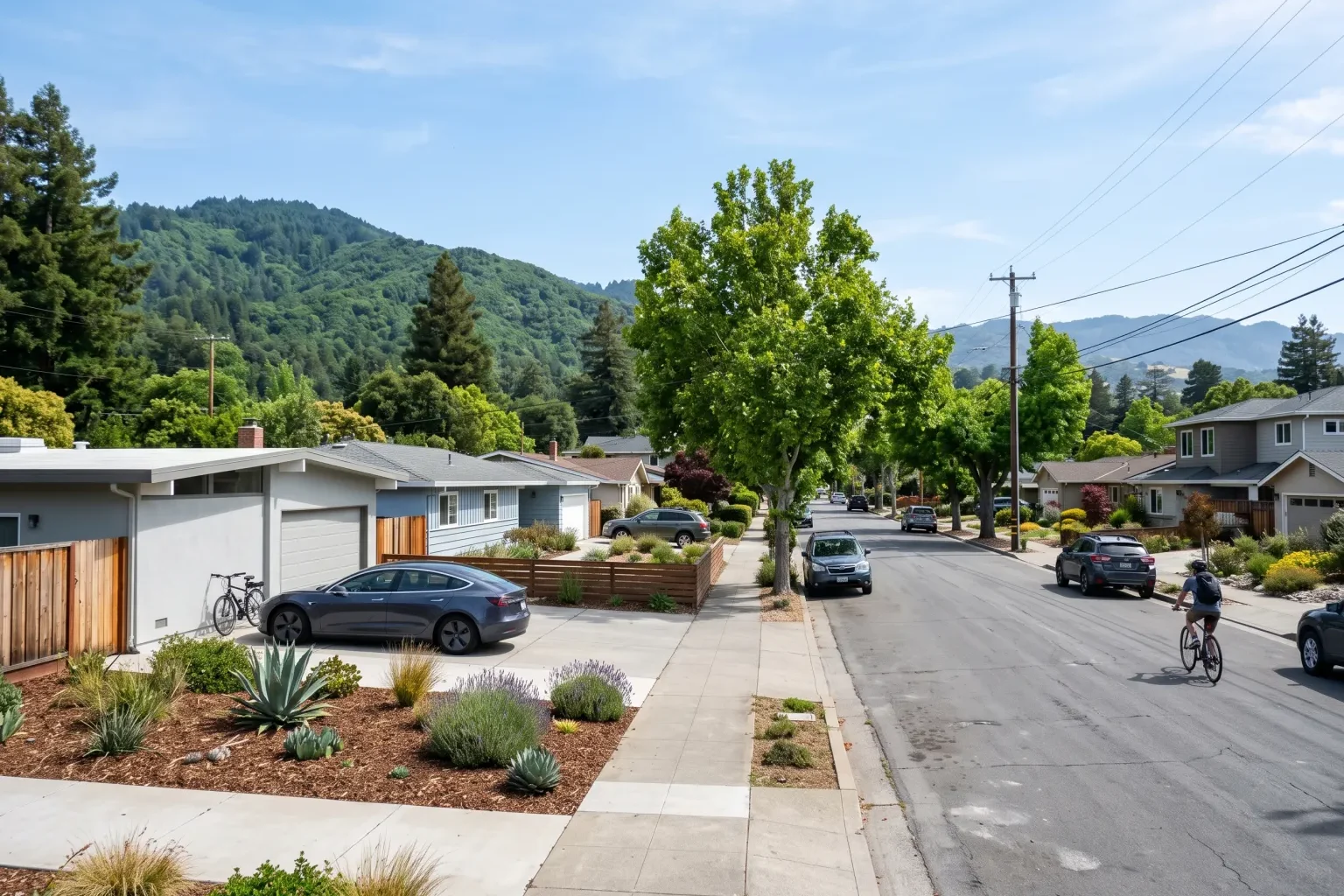
The short answer
Mountain View's mild, damp winters and moderate summers suit heat pumps well, and a properly sized system can replace both a gas furnace and a central air conditioner. Bay Area Air District rules don't force you to replace working equipment, but gas furnaces made from 2029 must meet a zero-NOx standard. That standard points most future replacements toward heat pumps.
A heat pump heats and cools your home with one electric system. It moves heat indoors in winter and pushes it outdoors in summer. For many Mountain View homeowners, it makes sense to look at one when an old furnace or air conditioner is near the end of its life, or when they plan to move away from gas. ComfortFlow HVAC Contractor installs heat pumps in homes across 94040, 94041, and 94043, about 17 miles from our San Jose base. This page covers what affects a good installation here, the choices you'll make, and how local air rules and incentives fit into your timing.
Why Heat Pumps Fit Mountain View Homes
The Santa Clara Valley has a Mediterranean climate: dry summers and mild, damp winters. Mountain View sits closer to the Bay than the inland and southern parts of the valley, so summer heat is usually less intense here. A heat pump runs most efficiently in moderate temperatures, and that describes most of the year in this city.
Winter nights here are cool, not severe. A correctly sized heat pump can keep a home comfortable without a gas backup. In summer, the same unit handles cooling, so you aren't maintaining two separate systems. Damp winter air also makes the dehumidifying effect of a heat pump useful in homes that tend to feel clammy.
What We Check Before Recommending a System
A heat pump that's too large cycles on and off and handles humidity poorly. One that's too small struggles on the coldest nights. We don't size by square footage alone. Before we recommend equipment, we look at:
- Heating and cooling load, based on insulation, windows, sun exposure, and ceiling height
- Condition, size, and layout of existing ductwork, including leaks and undersized returns
- Electrical panel capacity and whether the home has room for a new dedicated circuit
- Outdoor unit placement, with attention to clearance, noise near bedrooms and neighbors, and drainage
- Where the indoor equipment will go: an existing furnace closet, an attic, a garage, or wall-mounted heads
Ducted, Ductless, or a Mix
If your home already has ducts in reasonable shape, a ducted heat pump can often go where your furnace and AC coil are now. It keeps the same vents you're used to. We'll tell you if the ducts need sealing or resizing first. Leaky ducts in an attic or crawlspace waste a lot of what a heat pump produces.
Homes without ducts, or with rooms the current system never reaches well, often do better with ductless mini-splits. Each indoor head controls its own zone. That works well for additions, converted garages, or upstairs bedrooms that run warm. Some homes use both: a ducted system for the main living area and a ductless head for a problem room. We'll lay out the tradeoffs in plain terms so you can choose.
Air District Rules, Tax Credits, and Incentives
Under Bay Area Air District Rule 9-4, natural gas furnaces manufactured from 2029 must meet a zero-NOx emission standard. In practice, that steers homeowners toward heat pumps when they replace a furnace after that date. The rules don't require you to replace equipment that still works. They apply only when an existing furnace or water heater fails or is replaced. Many owners plan ahead so they aren't choosing a system in a rush during a breakdown.
If you're also considering a heat pump water heater, note that Rule 9-6's zero-NOx date for small water heaters was set for 2027. The Air District Board is considering amendments in November 2026 that could delay it. Check the current rule before you plan that replacement.
The federal Energy Efficient Home Improvement Credit (25C) covered qualifying heat pumps placed in service before December 31, 2025. It isn't available for new installations after that date. Local options may still exist. Bay Area homeowners can check BayREN and their local clean energy provider for current heat pump and electrification incentives. Amounts and availability change by funding cycle, so we confirm the current offer before including it in any quote.
Installation Day and Areas We Serve
Most installations follow the same steps. We remove the old equipment, set the outdoor unit and indoor air handler or heads, run the refrigerant lines and condensate drain, and complete the electrical work. Then we start the system, check airflow and refrigerant charge, and walk you through the thermostat and filter. We keep work areas covered and haul away old equipment.
Along with Mountain View, we install heat pumps in Los Altos, Sunnyvale, Cupertino, Santa Clara, and Saratoga.
More services in Mountain View
- AC Repair in Mountain View
- Heating Repair in Mountain View
- AC Installation in Mountain View
- Furnace Repair in Mountain View