
The short answer
A ductless mini-split is a heat pump that heats and cools individual rooms without ductwork, which makes it a strong fit for South Bay homes with no ducts, problem rooms, or additions. We size each system for the actual room and give you a written estimate after an on-site visit.
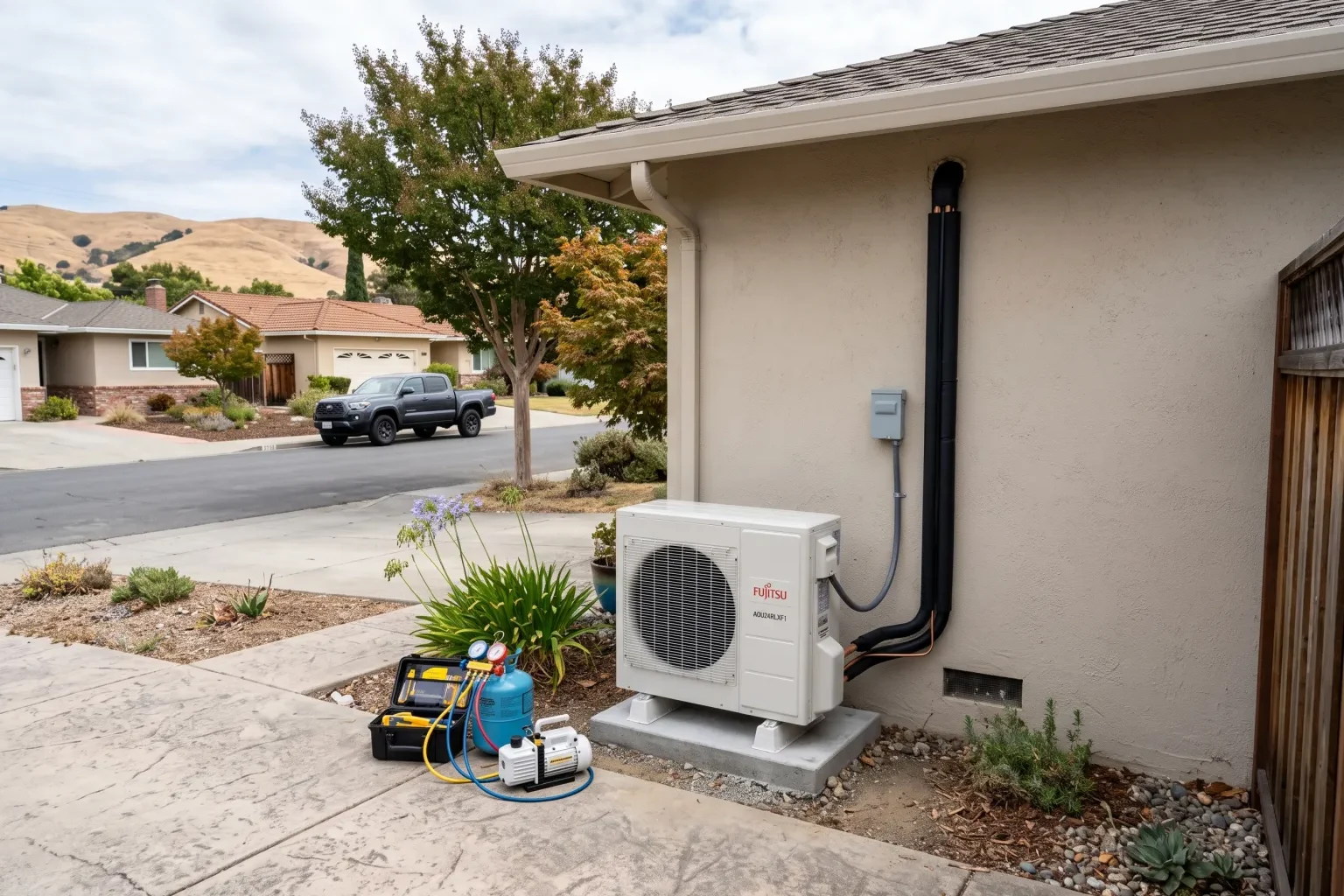
A ductless mini-split heats and cools individual rooms without ductwork. An outdoor unit connects to one or more indoor units through a small refrigerant line that passes through a hole about three inches wide in an exterior wall. For many San Jose homes, it's a practical way to get efficient comfort where you need it. That includes older houses built without ducts, additions, converted garages, and upstairs bedrooms that stay hot long after sunset. ComfortFlow installs single-zone and multi-zone systems for homeowners in San Jose and nearby cities, including Santa Clara, Sunnyvale, Campbell, Milpitas and Cupertino. This page explains when a mini-split makes sense, what we look at before recommending one, what drives the cost, and how an installation visit works from start to finish.
Signs a Mini-Split May Be Right for Your Home
The Santa Clara Valley has dry summers and mild, damp winters. Inland and southern parts of the valley run noticeably hotter in summer than areas closer to the Bay. Many homes need real cooling for part of the year and only moderate heating the rest of it. Heat pump mini-splits handle both jobs with one system.
A mini-split is worth considering if any of these sound familiar:
- Your home has no ductwork, or the existing ducts are leaky, crushed or run through spaces that are hard to reach.
- One or two rooms are always hotter or colder than the rest of the house.
- You've added a room, finished a garage or built an accessory dwelling unit and don't want to extend ducts to it.
- You rely on window air conditioners, portable AC units or plug-in space heaters.
- Your gas furnace is aging and you want to plan a switch to electric heat before it fails.
- You want to heat or cool rooms on separate schedules instead of conditioning the whole house at once.
What We Check Before Recommending a System
A mini-split only performs well when it's sized and placed for the specific room. An oversized unit cycles on and off and leaves rooms clammy. An undersized one runs constantly and still can't keep up on the hottest afternoons. We don't size by square footage alone. During the assessment, we look at:
- Room size, ceiling height, window area and sun exposure, especially in west-facing rooms
- Insulation levels and air leaks in walls, the attic and around windows and doors
- How many rooms or zones you want to control and how each space is used
- Where indoor units can mount (high on a wall, in a ceiling cassette or as a floor console) and how the refrigerant line will route
- A level, accessible location for the outdoor unit, with room for airflow and service, placed away from bedroom windows and property lines where possible
- Electrical panel capacity and whether a new dedicated circuit is needed
- A drainage path for the condensate water each indoor unit produces
Repair, Replace or Add a Mini-Split
Not every comfort problem calls for new equipment. If you already have a mini-split that isn't keeping up, we diagnose it first. Dirty filters and coils, a clogged condensate line, a refrigerant leak, or a failed sensor or control board can often be repaired. Replacement makes more sense when the system has a major component failure, uses an older refrigerant that's becoming harder to service, or was undersized from the start.
If you have a central furnace or air conditioner, there are several ways to go:
The Bay Area Air District's appliance rules don't require you to replace a furnace that still works. They apply only when existing equipment fails or is replaced. Under Rule 9-4, however, natural gas furnaces manufactured from 2029 must meet a zero-NOx emission standard. In practice, that points homeowners toward heat pumps when a furnace is replaced after that date. Planning ahead lets you make that choice on your own schedule instead of during a breakdown.
- Repair the existing mini-split when the problem is isolated and the rest of the system is in good shape
- Add a single-zone unit to handle one problem room alongside your current system
- Install a multi-zone system to replace window units or an aging furnace and AC
- Combine ducted and ductless equipment when some areas have usable ducts and others don't
What Affects the Cost of Installation
Every home is different, so we provide a written estimate after the site visit instead of quoting over the phone. The main factors are:
On incentives: the federal Energy Efficient Home Improvement Credit (25C) covered qualifying heat pumps placed in service before December 31, 2025. It isn't available for new installations after that date. Bay Area homeowners can check BayREN and their local clean energy provider for current heat pump and electrification incentives. Amounts and availability change with each funding cycle, so we confirm the current offer before including it in your estimate.
- The number of indoor units and zones
- System capacity and efficiency rating
- Indoor unit style: wall-mounted, ceiling cassette or floor console
- Line set length and how hard the route is, such as a short run through an exterior wall versus a path through an attic, crawl space or multiple floors
- Electrical work, including new circuits or a panel upgrade
- How the outdoor unit is mounted: a ground pad, a wall bracket or a roof stand
- Whether a condensate pump is needed where water can't drain by gravity
- Permit requirements in your city
- Removal and disposal of old equipment
How an Installation Visit Works
We aim to make the process predictable and to keep the disruption inside your home as small as possible. Here's what to expect:
A single-zone installation is often finished in about a day. Multi-zone systems and jobs that need electrical upgrades take longer. We'll give you a realistic timeline with your estimate.
- Assessment: A technician visits your home, takes measurements, checks the items listed above and talks with you about how you use each room.
- Written estimate: You receive a clear proposal with equipment options and scope of work, so you can compare choices without pressure.
- Scheduling and permits: Once you approve, we schedule the work and handle any permits your city requires.
- Installation: We mount the indoor and outdoor units, run and seal the line set, complete the electrical connections, set up drainage, then pressure-test and vacuum the refrigerant lines before startup.
- Walkthrough: We test every zone in heating and cooling mode, show you how to use the remote or app, and explain how to clean the filters.