
The short answer
Most homes need duct cleaning only when there's a specific reason, such as visible dust buildup, musty odors, recent remodeling, or pest activity, not on a fixed schedule. ComfortFlow inspects your whole duct system first, then recommends cleaning, repair, or replacement based on what we find.
Your ducts carry all the air your furnace, heat pump, or air conditioner moves through your home. Over time they collect dust and debris, and sometimes things that shouldn't be there at all, like construction leftovers or signs of pests. They can also develop leaks, crushed sections, and loose connections that waste the air you're paying to heat and cool. ComfortFlow HVAC Contractor cleans and inspects duct systems for homeowners in San Jose and nearby cities. We look at the whole system, not just the dust, so you know whether cleaning will help or whether a repair makes more sense. Here's what to watch for and what to expect.
Signs Your Ducts Need Cleaning
Most homes don't need duct cleaning on a fixed schedule. It makes sense when there's a specific reason. In the Santa Clara Valley, long dry summers put more fine dust in the air. Homes in the hotter inland and southern parts of the valley often run air conditioning hard for months, which pulls that dust through the system again and again.
If none of these signs apply and you change your filter regularly, cleaning may not do much for you. We'll tell you that plainly.
- Dust puffs out of supply registers when the system starts, or settles on furniture soon after you clean
- Visible buildup on register grilles or inside return openings
- A musty or stale smell when the heat or AC runs
- Recent remodeling, drywall work, or floor sanding while the system was running
- Signs of rodents or insects, such as droppings or nesting material near vents or in the attic
- Visible mold inside ducts or on components (the moisture source has to be fixed too, not just cleaned)
- You moved into a home and don't know when the ducts were last looked at
What We Check
Every cleaning visit starts with an inspection. Dirty ducts are often only part of the story. Cleaning a system that has a torn duct or a disconnected run in the attic won't fix rooms that stay too hot or too cold.
When access allows, we use a camera so you can see the inside of your ducts before and after the work.
- Supply and return registers, grilles, and the boots where ducts meet the ceiling, floor, or wall
- Duct runs in the attic, crawlspace, or garage for tears, crushed sections, sagging, and disconnected joints
- Insulation on ducts that run through unconditioned spaces
- The return side, including the filter slot and how well the filter fits
- The blower and evaporator coil area, since buildup there restricts airflow
- Signs of moisture, pest entry, or contamination
Clean, Repair, or Replace
Once we know the condition of your system, there are generally three paths.
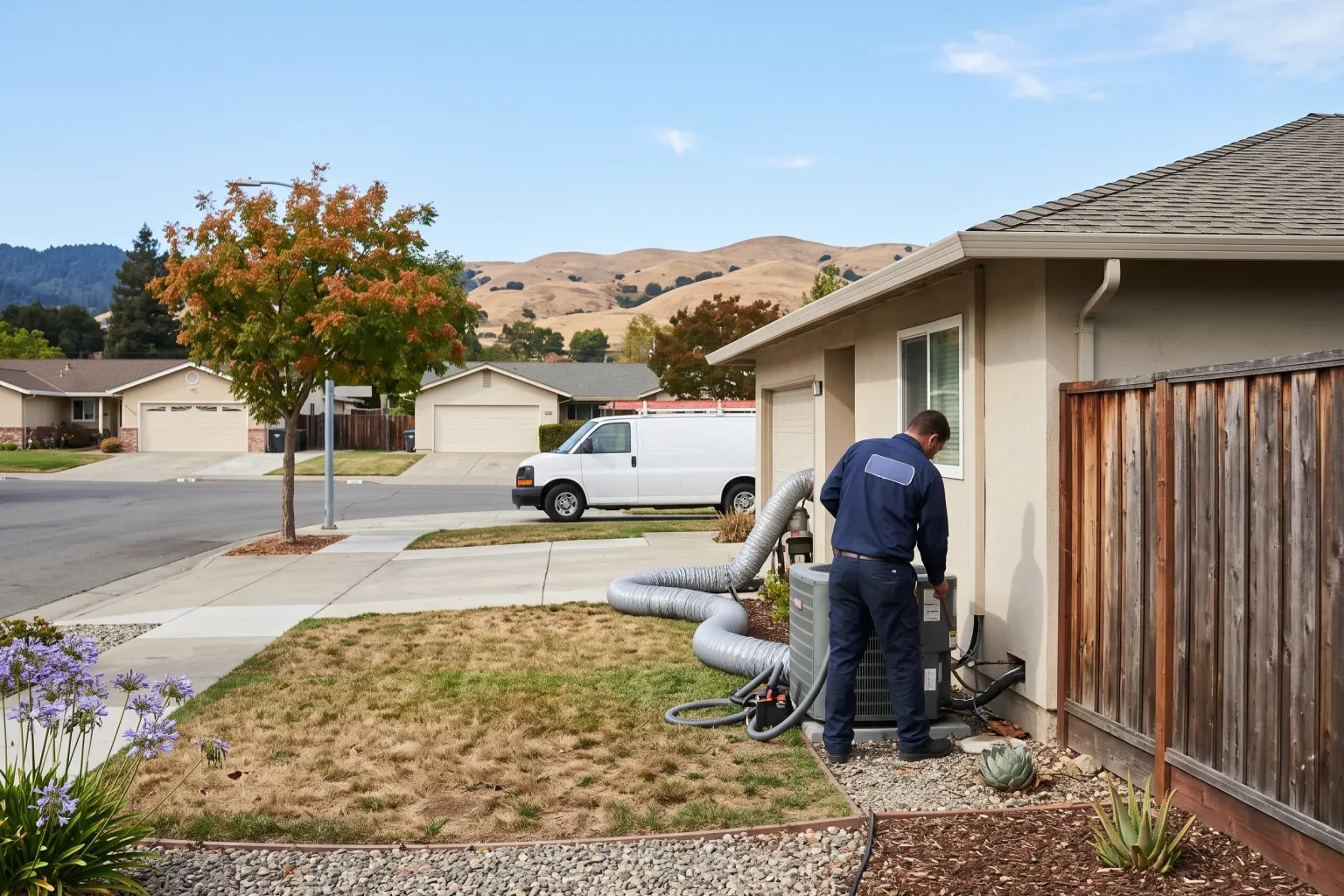
Cleaning alone fits ducts that are structurally sound but dirty. We use negative-pressure equipment to pull debris out of the system while loosening it from duct walls. We also clean registers and accessible components.
Repair fits ducts that are mostly in good shape but have problem spots: a disconnected run, a crushed section of flex duct, leaky joints, or damaged insulation. Reconnecting and sealing these sections can improve airflow to rooms that never seem to get comfortable. We often clean and repair in the same visit.
Replacement makes sense when ducts are old and brittle, heavily damaged, contaminated beyond what cleaning can address, or poorly sized for your equipment. Older flex duct in a hot attic can break down over time. Replacement is also worth discussing if you plan to switch to a heat pump, since airflow needs can differ from your current system.
That last point matters more in the Bay Area now. Under Bay Area Air District rules, natural gas furnaces manufactured from 2029 must meet a zero-NOx standard, which points many homeowners toward heat pumps when a furnace is eventually replaced. The rules don't require you to replace working equipment, but if you're already planning duct work, it can make sense to plan for your next system at the same time.
What Affects the Cost
We quote after we've seen your system, because no two duct layouts are the same. These are the main factors:
- Size of the home and the number of supply and return registers
- Where the ducts run and how easy they are to reach; tight attics and crawlspaces take more time
- Type of duct, since rigid metal, duct board, and flexible duct are each cleaned differently
- How much buildup there is, and whether there's pest debris or other contamination
- Whether repairs, sealing, or new insulation are needed
- Whether the blower, coil, or other equipment needs cleaning too
- How many HVAC systems serve the home
How a Visit Works
Here's what happens from the time we arrive:
- We lay down drop cloths and protect floors and furniture near the work areas
- We inspect the system and walk you through what we find, with photos or camera footage when possible
- We explain your options and give you a quote before any work starts
- For cleaning, we seal off registers, connect negative-pressure equipment, and work through each duct run
- We make any repairs you've approved and put in a fresh filter
- We run the system, check airflow at the registers, and show you the results