
The short answer
You likely need a new AC if your system is aging, needs frequent repairs, can't keep up on hot days, or your home has never had central cooling. We inspect your home, ductwork and electrical service first, then explain your repair and replacement options, including heat pumps, so you can choose with clear information.
A new air conditioner is a big decision, and in the South Bay it matters more than many people expect. The Santa Clara Valley has dry summers and mild, damp winters, and inland and southern parts of the valley run noticeably hotter in summer than neighborhoods closer to the Bay. ComfortFlow HVAC Contractor installs central air conditioners and heat pumps for homeowners in San Jose, Santa Clara, Sunnyvale, Campbell, Milpitas, Cupertino and surrounding areas. This page explains when installation makes sense, what we look at before recommending equipment, how to weigh repair against replacement, what drives the cost, and what to expect during the visit.
Signs It May Be Time for a New AC
Some homes need a first-time installation because they have never had central air. Others have a system that still runs but is no longer worth keeping. These are the signs we hear about most often from South Bay homeowners.
One sign alone doesn't always mean replacement. A system that cools poorly might have a duct leak or a refrigerant issue that a repair can fix. Several signs together, especially on an older unit, usually point toward a new system.
- Your home has no central cooling and summer heat is making rooms uncomfortable, especially upstairs or in hotter inland parts of the valley.
- The system runs constantly on hot afternoons but the house never reaches the thermostat setting.
- Repairs are becoming routine, or a major part such as the compressor has failed.
- Your energy bills keep climbing even though your habits haven't changed.
- Some rooms stay much warmer than others.
- The unit is loud, short-cycles, or leaves the house feeling humid or stuffy.
- Your older system uses a refrigerant that is being phased out, which can make recharging it harder to arrange.
What We Check Before Recommending a System
A good installation starts with an accurate picture of your home. Choosing equipment based only on square footage or on the size of the old unit often leads to a system that is too big or too small. An oversized unit cycles on and off quickly and removes less moisture. An undersized unit runs nonstop and still falls behind in a heat wave.
Before we recommend anything, our technician walks through the house and looks at the parts of the system that affect comfort and efficiency.
- Cooling load: room sizes, ceiling heights, insulation, window size and direction, and how much afternoon sun the house gets.
- Ductwork: size, condition, leaks, disconnected runs, and whether the existing ducts can deliver enough airflow for a new system.
- Electrical service: panel capacity, breaker size, and whether the wiring to the outdoor unit can support the new equipment.
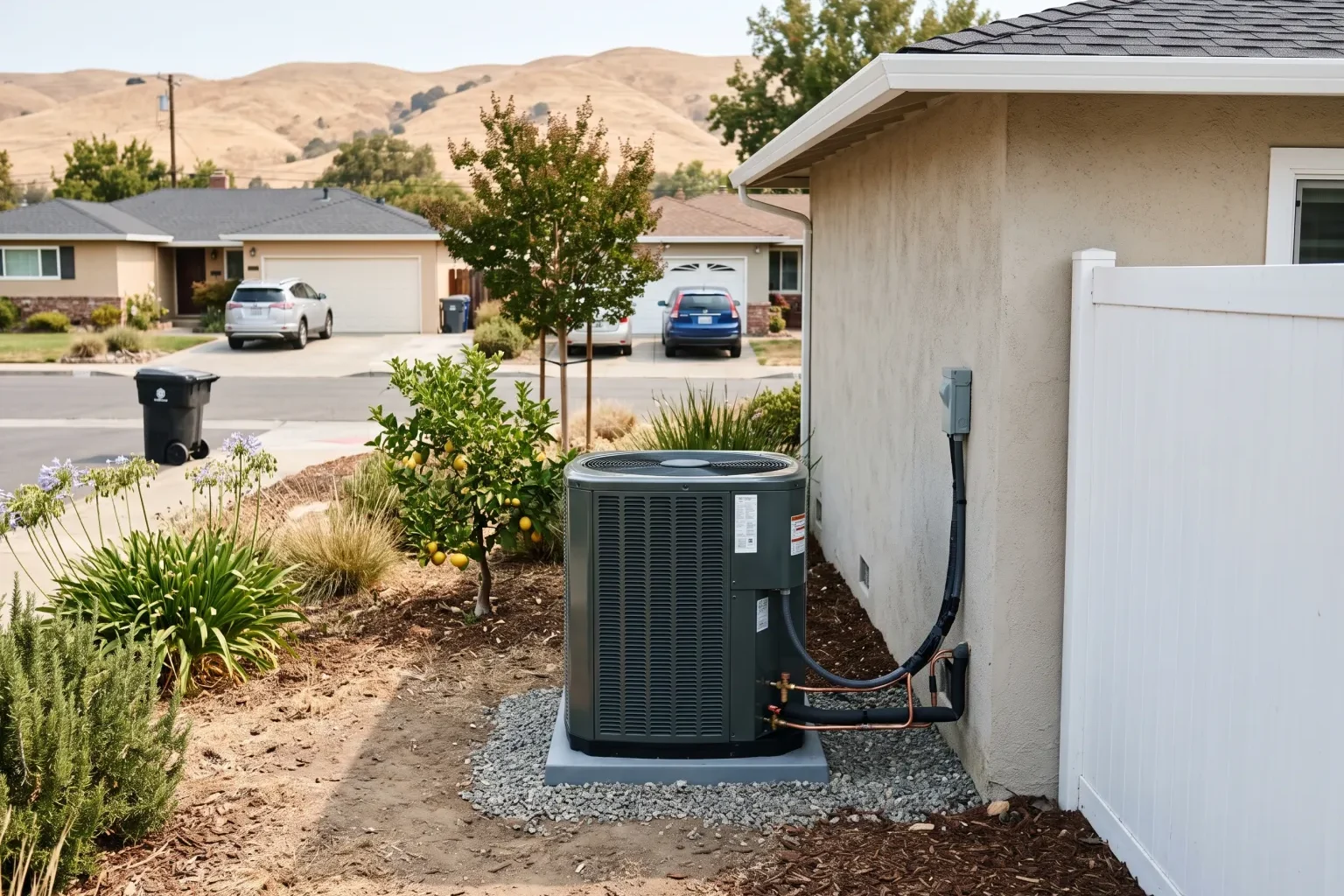
- Outdoor unit location: clearance, drainage, noise considerations near bedrooms or neighbors, and access for future service.
- Indoor equipment: the furnace or air handler, coil, filter setup and condensate drain.
- Thermostat and controls: whether your current thermostat will work with the new system or should be upgraded.
Repair or Replace: Your Options
If you already have an air conditioner, we start by asking whether a repair is reasonable. When the problem is a failed capacitor, a clogged drain or a small refrigerant leak on a system in good overall shape, repair is often the sensible choice. We will tell you that plainly.
Replacement usually makes more sense when the system is near the end of its useful life, when the repair involves a major component, or when repair costs keep adding up. Here are the main replacement paths we discuss with homeowners.
Central air conditioner: a standard split system that pairs an outdoor condenser with an indoor coil, usually working alongside an existing gas furnace. This can be a straightforward swap when the furnace is in good shape.
Heat pump: a heat pump cools in summer and heats in winter, which suits the valley's mild winters well. Many homeowners choose one when the AC and furnace are both aging. Under Bay Area Air District rules, gas furnaces manufactured from 2029 must meet a zero-NOx standard, which in practice points toward heat pumps for furnace replacements after that date. These rules don't require you to replace working equipment; they apply only when a furnace fails or is replaced.
Ductless mini-split: a good fit for homes without ducts, additions, converted garages, or rooms that never cool properly on the central system.
What Affects the Cost of AC Installation
Every installation is priced after we see the home, because the details vary widely from house to house. These are the factors that have the biggest influence on the final quote.
On incentives: the federal Energy Efficient Home Improvement Credit applied only to qualifying heat pumps placed in service before the end of 2025, so it isn't available for new installations now. Bay Area homeowners can check BayREN and their local clean energy provider for current heat pump and electrification incentives. Those programs change by funding cycle, so we confirm what is currently offered before including it in a quote.
- Type of system: central AC, heat pump, or ductless mini-split.
- Size and efficiency rating of the equipment you choose.
- Whether existing ductwork can be reused or needs sealing, resizing or replacement.
- Electrical upgrades, such as a new circuit or panel work.
- Installation access, including attic crawl space, tight closets, or long line set runs.
- Permits and inspection requirements from your city.
- Add-ons such as a new thermostat, upgraded filtration, or a new pad for the outdoor unit.
How an Installation Visit Works
First, we schedule an in-home assessment. A technician inspects your current setup, measures the home, checks ducts and electrical service, and asks how the house feels in summer and which rooms give you trouble.
Next, we go over your options in plain terms, including whether repair is worth considering. You get a written quote that lists the equipment, the work involved and any permit requirements, so you can compare choices without pressure.
On installation day, the crew protects floors and work areas, removes the old equipment if there is any, sets the new indoor and outdoor units, connects refrigerant lines, wiring and drainage, and seals any duct connections we touch. Most standard replacements are finished in a day. Jobs involving new ductwork or electrical upgrades can take longer.
Before we leave, we start the system, check refrigerant charge, airflow and temperature split, and confirm the thermostat is working correctly. We show you how to change the filter and use the controls, and we arrange the city inspection when a permit is required.
AC Installation by city
- AC Installation in Milpitas
- AC Installation in Campbell
- AC Installation in Santa Clara
- AC Installation in Los Gatos
- AC Installation in Monte Sereno
- AC Installation in Saratoga
- AC Installation in Sunnyvale
- AC Installation in Fremont
- AC Installation in Cupertino
- AC Installation in Morgan Hill
- AC Installation in Mountain View
- AC Installation in Los Altos